No Comments
Motorcycle Licence in Greece: The Essential 2026 Guide
If you have just moved to Crete, or you are staying for a season, the question comes up fast: can you legally ride a scooter here on the licence in your pocket? The rules around a motorcycle licence in Greece are clearer than most people expect, but they depend on two things that are easy to miss — where your licence was issued, and whether it actually carries a motorcycle category. This guide covers both, plus what to do if it does not.
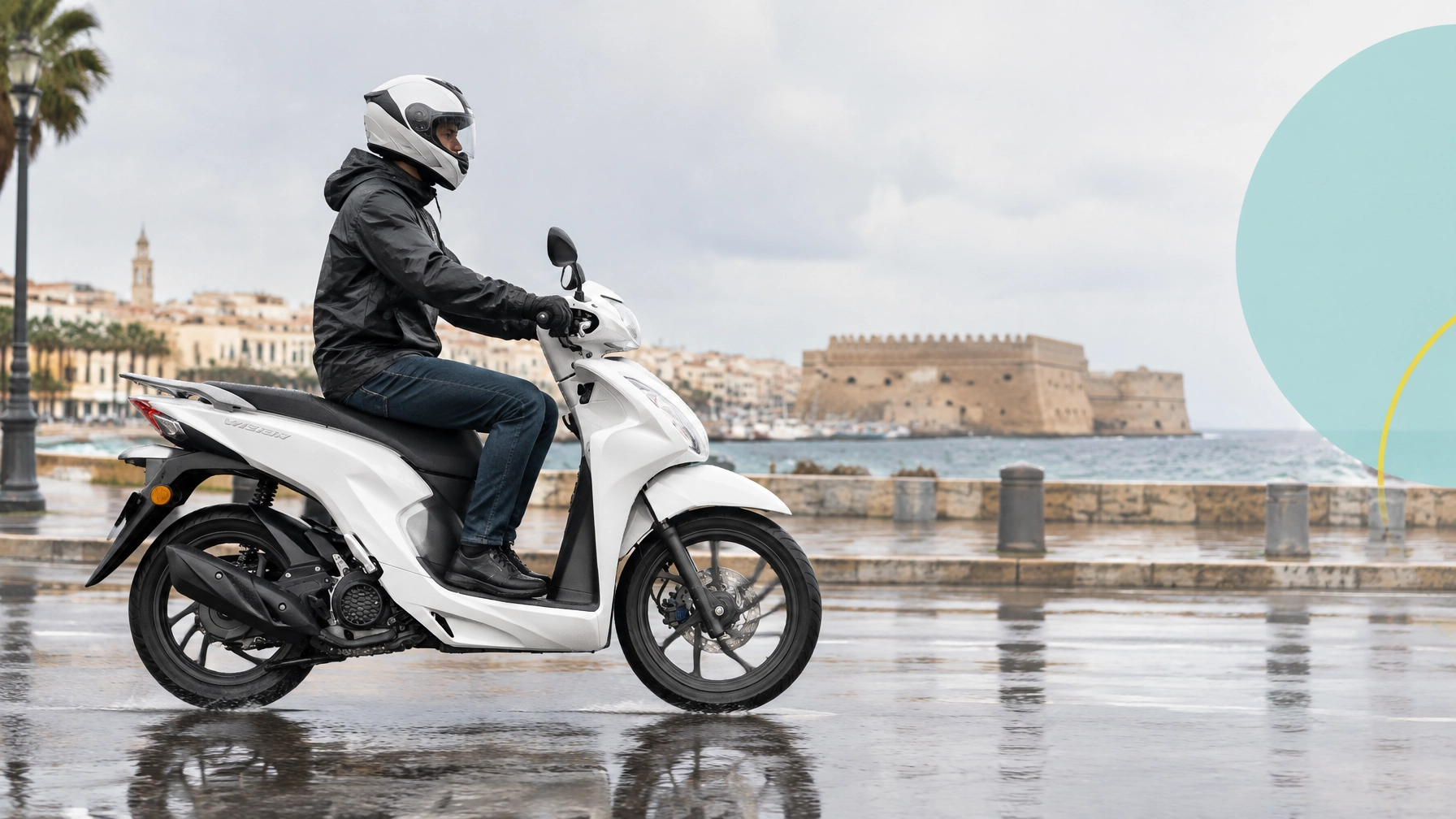
Does your motorcycle licence in Greece actually work? The short answer
If your licence was issued in an EU or EEA country and it carries a motorcycle category, you are fine. You can ride here with no extra paperwork, for as long as the licence is valid. If it was issued outside the EU, you can normally ride for up to six months as a visitor, and after that you need to deal with an exchange or sit Greek exams.
The part that catches people out is the category. A licence that only covers cars does not let you ride anything above a 50cc moped, no matter which country issued it. That single detail is behind most of the confusion around a motorcycle licence in Greece, and it is worth checking before you plan a whole summer around a scooter.
If you hold an EU or EEA licence
This is the simplest case. An EU or EEA licence stays fully valid in Greece for as long as it has not expired, and there is no obligation to exchange it even after you become a resident. Your A1, A2 or A category is recognised directly, with the same limits it carries at home.
You can still choose to exchange it for a Greek licence of the equivalent category without taking exams, which some long-term residents prefer for practical reasons. It is optional rather than required, so there is no deadline pushing you.
If you hold a non-EU licence
Licences from outside the EU are generally accepted for up to six months, provided your country is a signatory to the 1968 Vienna Convention on Road Traffic. That window is designed for visitors, not residents, and it is measured from when you arrive rather than from when you decide to buy a scooter.
Once you establish residence, the six-month clock becomes a 185-day residency rule and you are expected to move onto a Greek licence. Some countries can exchange without sitting exams; others cannot, and their holders have to go through the full Greek process from scratch.
Which countries can exchange without exams
Greece allows a direct exchange of licences issued in a defined list of non-EU countries, which currently includes Switzerland, Serbia, Albania, the United States, Canada, Australia, Japan, South Africa and South Korea. If your licence comes from one of these, the exchange is administrative rather than an examination.
If your licence was issued anywhere else outside the EU, there is no exchange route. You would need to obtain a motorcycle licence in Greece the same way a Greek resident does, with theory lessons, practical lessons and both exams. Plan for that early if you intend to stay.
When you need an International Driving Permit
An International Driving Permit is required when your national licence is not printed in Greek or Latin characters. It is not a licence in its own right — it is an official multilingual translation, and it is only valid when you carry it together with the original licence it translates.
If your licence already uses Latin script, an IDP is usually unnecessary. It is cheap and quick to obtain in your home country before you travel, though, and it removes any argument at a roadside check. You cannot obtain one in Greece for a foreign licence, so sort it out before you leave.
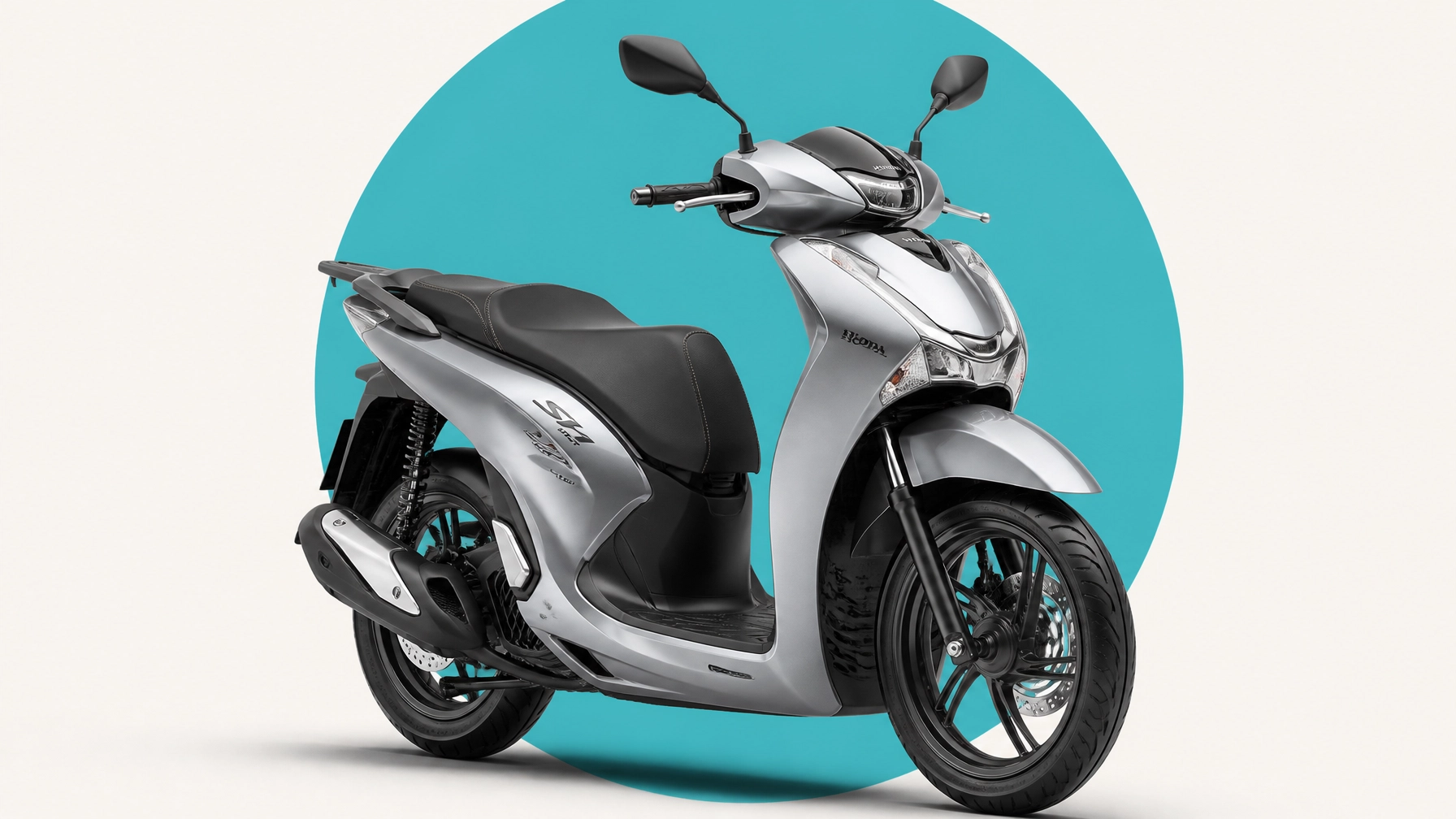
The category that actually matters: A1, A2 and A
Greek categories follow the standard European structure. AM covers mopeds up to 50cc from age 16. A1 covers motorcycles up to 125cc and 11 kW from age 18. A2 raises the ceiling to 35 kW from age 20. Category A, with no power restriction, requires age 24, or 22 with two years of A2 behind you.
For everyday riding in Heraklion, A1 is usually all you need. The 125cc class covers the entire practical range of city scooters, and it is the category most long-stay riders end up using. A2 only becomes relevant if you want something in the 300 to 500cc range.
Why a car licence is not enough
Greek residents who have held a category B licence for a period can be entitled to ride a 125cc within Greece under specific national conditions. This provision is tied to Greek-issued licences and does not automatically extend to a foreign car licence, which is where a lot of visitors get it wrong.
The safe assumption is straightforward: if your licence does not show A1, A2 or A, do not ride anything above a 50cc moped in Greece. Riding without the correct category invalidates your insurance, which turns a minor incident into a very expensive problem.
Getting a Greek motorcycle licence from scratch
The process is the same one Greek applicants follow. You submit documents to the local Transport Directorate, usually through a driving school that handles the paperwork, then complete theory and practical training before sitting two exams. For the A2 category the standard programme is 11 hours of theory and 12 hours of practical riding.
You also need to satisfy a residency condition: normal residence in Greece, or student status for at least six months within the last twelve. Medical certificates from a pathologist and an ophthalmologist are part of the file for a first issue.
Motorcycle licence in Greece: costs and paperwork to budget for
State fees for a first issue come to 135 euros in total — 105 for issuing the category, 15 for the theory exam and 15 for the practical. If you already hold a Greek category B licence and are extending it, the structure changes to roughly 27 euros for the extension, 30 for printing and 15 for each exam.
Those are only the state fees. Driving school tuition is separate, varies by region and by how many practical lessons you take, and will be the larger part of your total. Ask for a written quote that states how many lessons are included and what each additional one costs. Always confirm current requirements on gov.gr, since rules and fees change.
Riding in Crete: what the guides do not tell you
Heraklion traffic is dense in the centre and relaxed outside it. The bigger adjustment for most newcomers is the wind. Northerly gusts are a normal part of life here, and crossing an exposed stretch of coast road on a light scooter feels very different from riding in a calm city. Take it slowly the first few times.
Road surfaces vary sharply once you leave the main routes. Gravel at the edge of village roads and diesel patches near junctions are the two most common causes of low-speed falls. Neither is dangerous if you are expecting them and riding at a sensible pace.
Helmet law and basic equipment
Helmets are compulsory for rider and passenger, and enforcement is real rather than nominal. Beyond the legal requirement, a properly fitted ECE-certified helmet is the cheapest safety equipment you will ever buy, so do not choose it on price alone.
Gloves matter more than people expect, because hands hit the road first in almost any fall. In summer heat, choose ventilated summer gear rather than skipping protection altogether — that is the trade-off most riders here get wrong.
Renting daily versus a monthly subscription
For a holiday of a few days, daily rental is the obvious answer and there are plenty of companies in Heraklion that do it well. The maths changes once your stay runs into weeks. Daily rates are priced for tourists, and a month of them costs far more than a monthly arrangement covering the same bike.
To be completely clear about what we do: MotoBooking operates on a monthly subscription only. We do not offer daily or weekly rental. If you need a scooter for three days, we are not the right fit and a rental company will serve you better. If you need one for a month or longer, the comparison usually favours us by a wide margin.
How MotoBooking works for expats and long-stay visitors
With MotoBooking ZERO you get a scooter on a monthly subscription with no down payment and no guarantor. Servicing, maintenance and insurance are included, and you can return the bike when your stay ends rather than committing to a long contract. That structure suits people whose plans are measured in months rather than years.
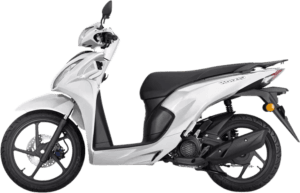
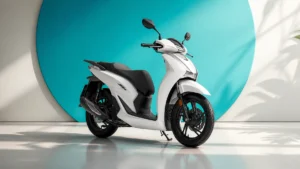
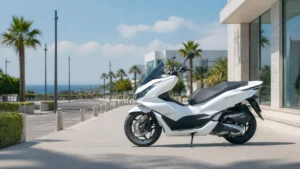
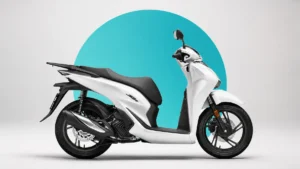
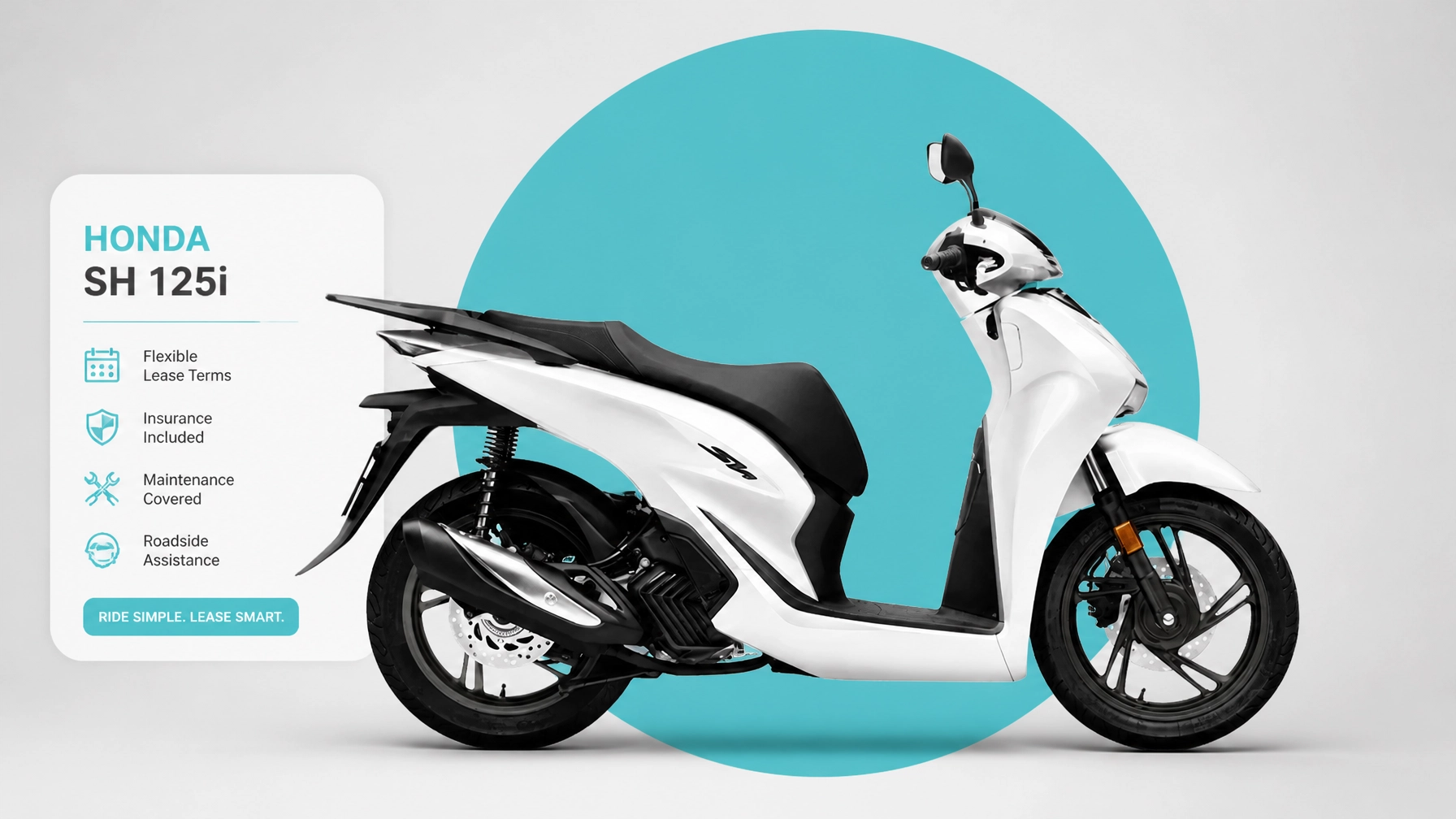
The fleet is mainly Honda — SH 125i, SH 150i, PCX 125, SH Mode 125 and Vision 110 — plus selected Voge models and electric scooters. You can see what each model costs on our prices page, or read more about how the monthly model works on the scooter leasing page.
One practical note: whatever you choose, you still need the right licence category. We check it at handover, and so does any insurer. Sorting your motorcycle licence in Greece before you arrive saves an awkward conversation later.
A realistic timeline for a motorcycle licence in Greece
From submitting documents to holding the licence, one to three months is typical. The variable is rarely your own progress — it is the availability of exam dates in your area, which tightens in busy periods. If you have a job starting on a fixed date, begin earlier than you think you need to.
If you are arriving soon and the timeline does not work, the sensible sequence is to arrive on a valid foreign licence within your six-month window, get settled, and start the Greek process once you have a residence address and the paperwork that goes with it.
Common motorcycle licence in Greece mistakes worth avoiding
The most frequent error is assuming a car licence covers a 125cc scooter because it does for some Greek licence holders. The second is letting the six-month visitor window lapse without starting an exchange, which leaves you riding uninsured in practice. The third is buying a bike before confirming the category you are entitled to ride.
None of these are difficult to avoid, but all three are expensive once they go wrong. Ten minutes checking your licence categories now is worth considerably more than it looks.
Frequently asked questions about a motorcycle licence in Greece
Can I ride a scooter in Greece on my EU licence?
Yes, provided it carries a motorcycle category such as A1, A2 or A. An EU or EEA licence stays valid in Greece for as long as it has not expired, with no need to exchange it.
How long can I use a non-EU licence?
Generally up to six months as a visitor, if your country signed the 1968 Vienna Convention. After you establish residence, the 185-day rule applies and you are expected to move onto a Greek licence.
Do I need an International Driving Permit?
Only if your national licence is not printed in Greek or Latin characters. An IDP is a translation, not a licence, and must always be carried together with the original.
Does my car licence let me ride a 125cc?
Not as a foreign licence holder. The Greek provision allowing category B holders to ride a 125cc is tied to Greek-issued licences. Without A1, A2 or A on your licence, do not ride above 50cc.
What does a motorcycle licence in Greece cost?
State fees for a first issue total 135 euros. Driving school tuition is separate and usually the larger cost, varying by region and by how many practical lessons you take.
Do you offer daily or weekly rental?
No. MotoBooking works on a monthly subscription only. We do not offer daily or weekly scooter rental.
Before you ride
Check the back of your licence for A1, A2 or A. If one of them is there and your licence is European, you are ready to ride. If it is not, or your licence is from outside the EU, work out which route applies to you before you commit to a bike. The rules here are informational and can change, so confirm your own situation with the Transport Directorate or your embassy.
Exchanging your licence: the practical steps
If your country is on the exchange list, the process runs through the local Transport Directorate. You submit your original licence, identity documents, photographs and the relevant fees, and you surrender the foreign licence when the Greek one is issued. Expect the exchange to take several weeks rather than days.
Two details trip people up. First, your foreign licence is handed in, so if you need it for trips home, plan around that. Second, the categories transfer as they are — an exchange cannot upgrade you. If your licence shows A1, the Greek one will show A1, and moving to A2 means the normal route to a motorcycle licence in Greece with training and exams.
Learning to ride here as a complete beginner
Plenty of people arrive in Crete having never ridden anything and decide a scooter is the obvious way to get around. That is a reasonable conclusion, but do it properly. A few hours with an instructor on a closed circuit will teach you low-speed control, emergency braking and how the bike behaves when you shut the throttle mid-corner.
Driving schools in Heraklion are used to international students and several teach in English. Even if you only intend to ride a 50cc moped, which needs no motorcycle category on an EU licence in many cases, the training is worth the money. Confidence built on a circuit is very different from confidence built in traffic.
Electric scooters and the licence question
Electric scooters are sorted by power output rather than engine size, which confuses people used to thinking in cubic centimetres. An electric machine rated up to 11 kW sits in the A1 bracket, and one up to 35 kW falls under A2. The same category logic that governs a petrol bike governs an electric one.
It is worth checking the rated output on the specification sheet rather than assuming, because some electric models marketed as equivalent to a 125 sit slightly above the A1 ceiling. If in doubt, ask before you ride, and confirm that your motorcycle licence in Greece covers the machine you are being handed.
Insurance and why the category is not a formality
Compulsory third-party insurance follows the bike, but it assumes the rider is legally entitled to ride it. If you are riding a category your licence does not cover, an insurer can decline a claim, and you are personally exposed to the cost of any damage or injury. This is the single strongest reason to get the paperwork right.
When a scooter comes with insurance included, as ours does, the cover is genuine but the same condition applies: the rider must hold the correct category. Nobody is trying to catch you out, and the check at handover takes a minute, but it is not negotiable.
Working in Greece and needing a bike quickly
If you have moved for work — seasonal hospitality, delivery, a remote job with an office day or two — transport becomes urgent fast. The realistic sequence is to confirm your licence category first, then sort transport, rather than the other way round. A bike you cannot legally ride is worse than no bike at all.
For delivery work specifically, employers and platforms will ask to see your licence and, depending on the arrangement, your insurance and vehicle documents. Having a clean set of paperwork from day one removes a common source of delay when you are trying to start earning.
What to carry when you ride
Carry your licence, and the IDP if your licence requires one. If you are riding a subscription or rental bike, keep the documents that came with it accessible, either in the under-seat compartment or as photographs on your phone. Roadside checks are routine rather than adversarial, and having everything to hand makes them a two-minute stop.
Keep a copy of your insurance details separately from the bike. If the scooter is stolen or badly damaged, having the policy reference somewhere other than under the seat saves time when you report it.
Putting it together
Almost everyone who asks about a motorcycle licence in Greece lands in one of three situations. You hold an EU licence with a motorcycle category and can simply ride. You hold a non-EU licence and have a six-month window plus a possible exchange route. Or your licence has no motorcycle category at all, in which case Greek training and exams are the path.
Work out which of the three applies to you, and the rest follows quickly. Once the licence question is settled, choosing the bike is the easy part — and for a stay measured in months, a monthly subscription usually makes more sense than either daily rental or buying something you will have to sell again.
Renewing and keeping your motorcycle licence in Greece valid
A Greek motorcycle licence is not issued once and forgotten. Categories A1, A2 and A carry renewal periods tied to your age, with medical checks required at renewal. The intervals shorten as you get older, and the responsibility for tracking the date sits with you rather than with any authority that will remind you.
If you are riding on a foreign licence, the expiry date on that document governs you in Greece too. An expired licence is an invalid licence here exactly as it is at home, and it takes your insurance cover with it. Put the date in your calendar the week you arrive.
What a motorcycle licence in Greece does not cover
Holding the right category is necessary but not sufficient. Your bike still needs valid registration, road tax where applicable and a current roadworthiness certificate. On a subscription or rental machine those are the provider’s responsibility, which is one of the quieter advantages of not owning the bike yourself.
A licence also says nothing about where you may ride. Some coastal and mountain tracks around Heraklion are unsurfaced and genuinely unsuitable for a city scooter, whatever your motorcycle licence in Greece permits on paper. Judge the road as well as the paperwork.
Bringing your own bike versus riding one here
Some people arriving for a long stay consider shipping their own motorcycle. It is rarely worth it below a year. Between transport costs, registration, road tax and the paperwork of importing a vehicle, the total normally exceeds a year of monthly subscription on a comparable machine.
The exception is a bike you are emotionally attached to and intend to keep permanently. For everyone else, sorting a motorcycle licence in Greece and picking up a local machine is simpler, cheaper and far less administratively painful.
A quick checklist before you ride in Crete
Confirm your licence shows A1, A2 or A. Confirm it has not expired. If it is non-EU, note the date you arrived and count your six months. Get an IDP if your licence is not in Latin script. Confirm the bike you are given matches the category you hold. Then get a helmet that fits properly and gloves you will actually wear.
Work through that list once and the question of a motorcycle licence in Greece stops being something you worry about. Everything after it is just riding, which is the part you came for.